After World War I, around 2 million prisoners of war and civilian workers were sent back to their countries of origin due to mass unemployment. As a result, labor migration remained limited in terms of numbers in the Weimar Republic.
Labor migration in the Weimar Republic was characterized by increasing systematization on the part of the state. This included, first of all, the so-called Labor Certification Act of 1922, which standardized many individual regulations. Work and residence permits were increasingly issued only in the agricultural sector and limited to one year. Migrant workers also had to be paid according to collective bargaining agreements, which initially curbed their previous exploitation to a large extent.
With the establishment of the “Reichsanstalt für Arbeitsvermittlung und Arbeitslosenversicherung” (Reich Institute for Employment and Unemployment Insurance) in 1927, a fundamental reorganization of the entire labor administration took place. The Reich Institute institutionalized the provisions laid down in the 1922 Employment Registration Act. The so-called “Inländerprimat” or priority law established the legal principle of “priority for domestic workers over foreign workers.” This was a response to the economic conditions and unemployment figures in the Weimar Republic, which gave rise to the desire to regulate migration according to demand and economic capacity. By linking residence permits to the “Inländerprimat,” labor migration is thus only permitted during periods of economic growth. Furthermore, migrants are increasingly being pushed into the low-wage sector, which exacerbates their economic and social disadvantage. To this day, the “nationality principle” is enshrined in law in the Federal Republic of Germany (but also applies to EU citizens. (As of 2014)




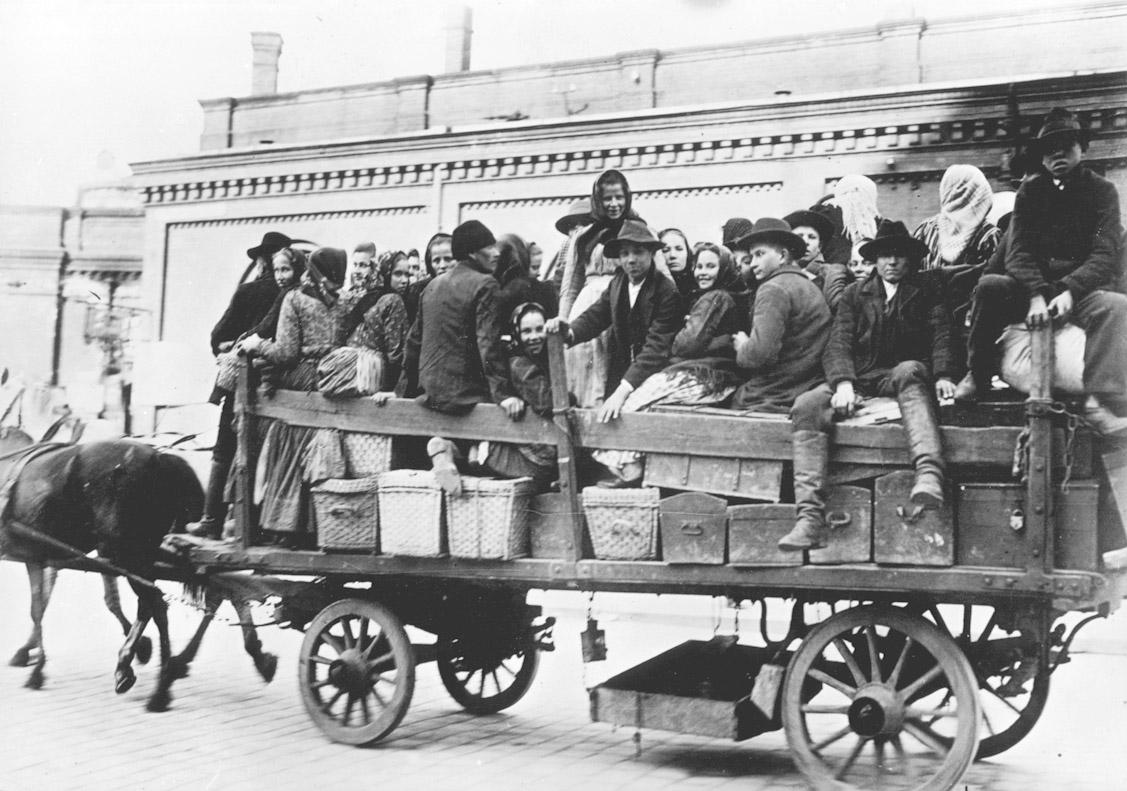 Gesellschaft für interregionalen Kulturaustausch - Berlin / Stowarzyszenie Instytut Śląskie - Opole Berlin-Oppeln, 1995